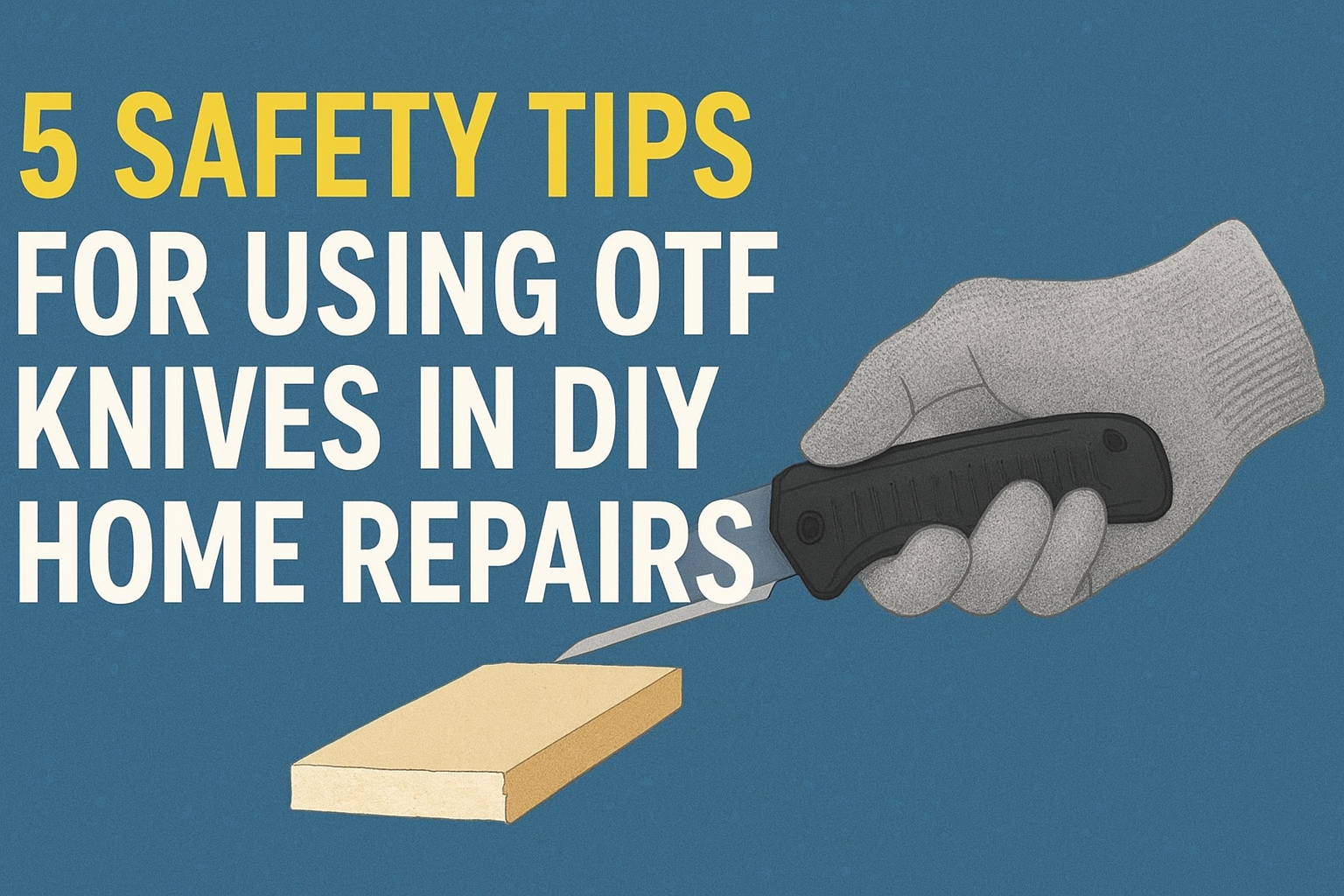
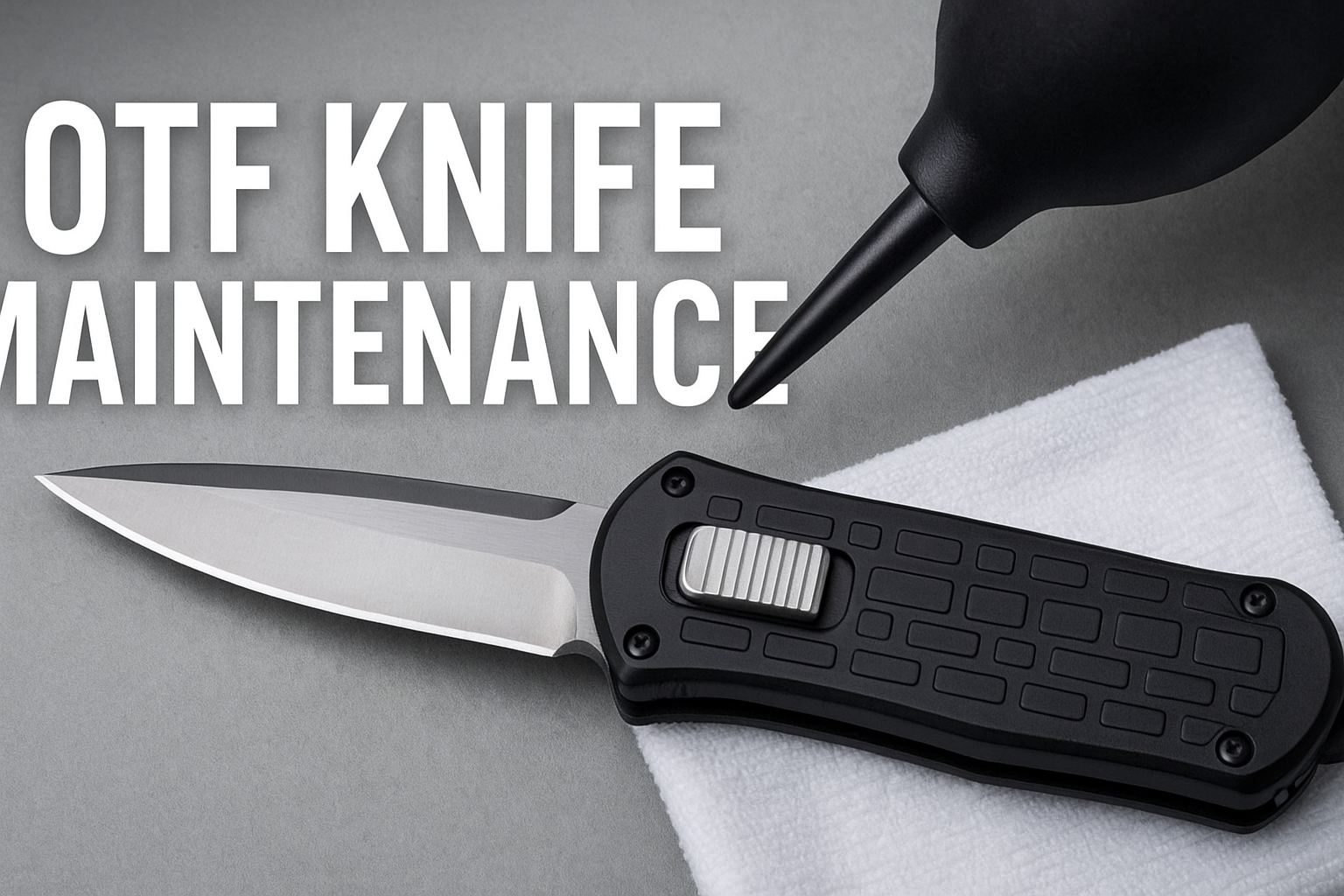
When it comes to choosing the right knife for your home, the debate often boils down to OTF knives (Out-the-Front knives) vs. folding knives. Both are compact, versatile, and practical, but each has unique features that cater to different needs. Whether you’re a collector, outdoor enthusiast, or someone who values preparedness, understanding their differences can help you make an informed decision.
In this guide, we’ll explore the key differences, pros and cons, and best uses of both knife types — so you can decide which one deserves a spot in your home.
What Is an OTF Knife?
OTF (Out-the-Front) knives are a type of automatic knife where the blade deploys and retracts straight out of the handle with the push of a button or switch. The mechanism is spring-assisted, allowing for rapid deployment — ideal for situations that require quick access to a blade.
How It Works:
When you press the activation switch, the blade slides out through an opening at the top of the handle. Pressing the switch again retracts the blade. This makes OTF knives fast, convenient, and visually impressive.
Common Uses:
- Emergency situations
- Self-defense (where legal)
- Tactical or rescue operations
- Everyday cutting tasks
What Is a Folding Knife?
A folding knife is one of the most popular and versatile types of knives available. The blade folds into the handle, making it safe and easy to carry in a pocket or drawer. Folding knives are typically manual, requiring you to open them using your hand or thumb stud.
How It Works:
You pull the blade out from the handle using a thumb stud, flipper, or nail nick. Many modern folding knives feature locking mechanisms like liner locks or frame locks to secure the blade during use.
Common Uses:
- Everyday carry (EDC)
- Camping and hiking
- Utility and household tasks
- Fishing or outdoor activities
Key Differences Between OTF and Folding Knives
| Feature | OTF Knife | Folding Knife |
|---|---|---|
| Deployment | Automatic, spring-loaded | Manual or assisted |
| Blade Mechanism | Slides out the front | Folds from the side |
| Speed | Extremely fast | Slightly slower |
| Maintenance | Requires more care | Easier to clean |
| Durability | Mechanism may wear over time | Typically more durable |
| Safety | Can misfire if poorly built | Safer with lock mechanisms |
| Legal Restrictions | Often regulated | Legal in most places |
| Price Range | Usually higher | More affordable options |
Advantages of OTF Knives
- Quick Deployment:
The main advantage of an OTF knife is speed. With just one click, the blade is ready for use — perfect for emergencies or tactical situations. - One-Handed Operation:
OTF knives can be deployed and retracted with one hand, which is ideal when your other hand is occupied. - Sleek Design:
OTF knives have a modern, mechanical appeal that collectors love. They’re stylish, compact, and efficient. - Precision Cutting:
Because of their centered blade design, OTF knives often provide precise control during cutting.
Disadvantages of OTF Knives
- Maintenance Needs:
The internal mechanisms can collect dust or debris, requiring regular cleaning and lubrication. - Legal Restrictions:
In many states or countries, OTF knives are classified as automatic knives, which may be restricted or illegal to carry. - Higher Cost:
Due to their complex build and materials, OTF knives tend to be more expensive than folding knives.
Advantages of Folding Knives
- Compact and Safe:
The blade folds securely into the handle, reducing the risk of accidental injury or deployment. - Easy to Maintain:
Folding knives have simpler mechanisms, making them easier to clean and maintain. - Affordable and Widely Available:
You can find a high-quality folding knife at almost any price point, from budget-friendly models to premium designs. - Legal and Practical:
Folding knives are legal in most regions and suitable for everyday tasks like opening boxes or cutting rope.
Disadvantages of Folding Knives
- Slower Deployment:
Manual opening requires two hands or extra time — not ideal for emergency use. - Wear and Tear:
Hinges and locks can wear out with heavy use, especially in cheaper models. - Less “Tactical” Feel:
Folding knives are great for general use but lack the speed and thrill of an OTF knife.
Which Knife Is Better for Home Use?
If your goal is general household use, the folding knife is usually the smarter choice. It’s:
- Easier to handle and store
- Safer for home environments
- More budget-friendly
- Widely legal
However, if you value speed, precision, and style, an OTF knife can be a great addition to your collection — provided it’s legal in your area and you’re comfortable maintaining it.
Safety Tips for Home Knife Storage
No matter which knife you choose, safety should always come first.
Here are some essential tips:
- Keep knives out of reach of children.
- Store in a sheath or drawer organizer to prevent accidental injuries.
- Regularly clean and lubricate the knife, especially if it’s an OTF model.
- Avoid leaving knives exposed on countertops or tables.
- Use knives only for intended purposes — not as prying tools or screwdrivers.
Final Verdict: OTF Knife vs Folding Knife
When comparing OTF Knife vs Folding Knife, it really comes down to your purpose.
- If you want a reliable everyday knife for simple home tasks, go with a folding knife.
- If you want a fast-deploying, tactical, and stylish knife for your collection or self-defense (where legal), consider an OTF knife.
Both knives offer value — but for most households, the folding knife wins in practicality, safety, and versatility.
Conclusion
Choosing between an OTF knife and a folding knife depends on your needs, preferences, and local laws. Folding knives excel in simplicity and reliability, while OTF knives shine in speed and modern design. Whichever you choose, always prioritize safety, quality, and proper maintenance to ensure long-lasting performance.