DIY home repairs have become increasingly popular as more people take pride in fixing, upgrading, and customizing their living spaces. Among the many tools used in these projects, OTF (Out-the-Front) knives have gained massive attention for their convenience, precision, and quick deployment. However, despite their usefulness, OTF knives require responsible handling. Like any sharp tool, improper use can lead to injuries, property damage, or unwanted accidents.
Whether you are cutting drywall, opening boxes, trimming wiring insulation, or crafting precise shapes in your renovation materials, an OTF knife can be incredibly effective—if used correctly. This guide covers five essential safety tips to ensure you can confidently and safely use your OTF knife in DIY home repair tasks.
What Is an OTF Knife?
Before diving into the safety tips, it’s crucial to understand what an OTF knife is. An OTF knife, or out-the-front knife, is a type of automatic knife where the blade deploys straight out from the front of the handle, rather than from the side like traditional folding knives. These knives are popular for their:
- One-handed operation
- Speed and convenience
- Compact design
- Precision and control
While they are extremely practical, they also come with a level of responsibility due to their mechanism and sharp blade. Now let’s explore how to safely use an OTF knife during home repair tasks.
1. Understand Your OTF Knife’s Mechanism Before Use
One of the most important safety tips is to fully understand how your OTF knife works. Unlike conventional folding knives, OTFs operate using a spring-loaded internal mechanism. If you don’t know how to properly open, close, or lock the knife, accidents can happen quickly.
Read the user manual
Most OTF knives come with a user guide that explains:
- Deployment mechanism
- Retraction mechanism
- Safety lock features
- Blade maintenance instructions
Spending just a few minutes reading can significantly reduce the risk of mistakes.
Practice deploying and retracting the knife
Before using your OTF knife on a project:
- Practice deploying the blade away from yourself
- Retract the blade several times to familiarize yourself
- Ensure the knife locks securely in place
Remember, the key to safe knife use is confidence + control.
2. Always Keep Your Hands and Work Area Stable
Even the best knife becomes dangerous when the work area is unstable. Many DIY injuries result not from the blade itself but from slips, wobbly surfaces, or poor hand placement. To avoid this:
Use a stable cutting surface
A flat, sturdy surface helps ensure your knife moves exactly as intended. Cutting on uneven surfaces increases the chance of losing control.
Keep your non-cutting hand away from the blade path
This may sound obvious, but when you’re in the middle of repairs, it’s easy to forget hand placement. Always ensure your supporting hand is:
- Behind the blade
- Positioned safely to the side
- Never in front of the cutting direction
Cut slowly and steadily
OTF knives can be extremely sharp and precise. There is no need to rush. A slow, controlled movement prevents slips and ensures clean cuts.
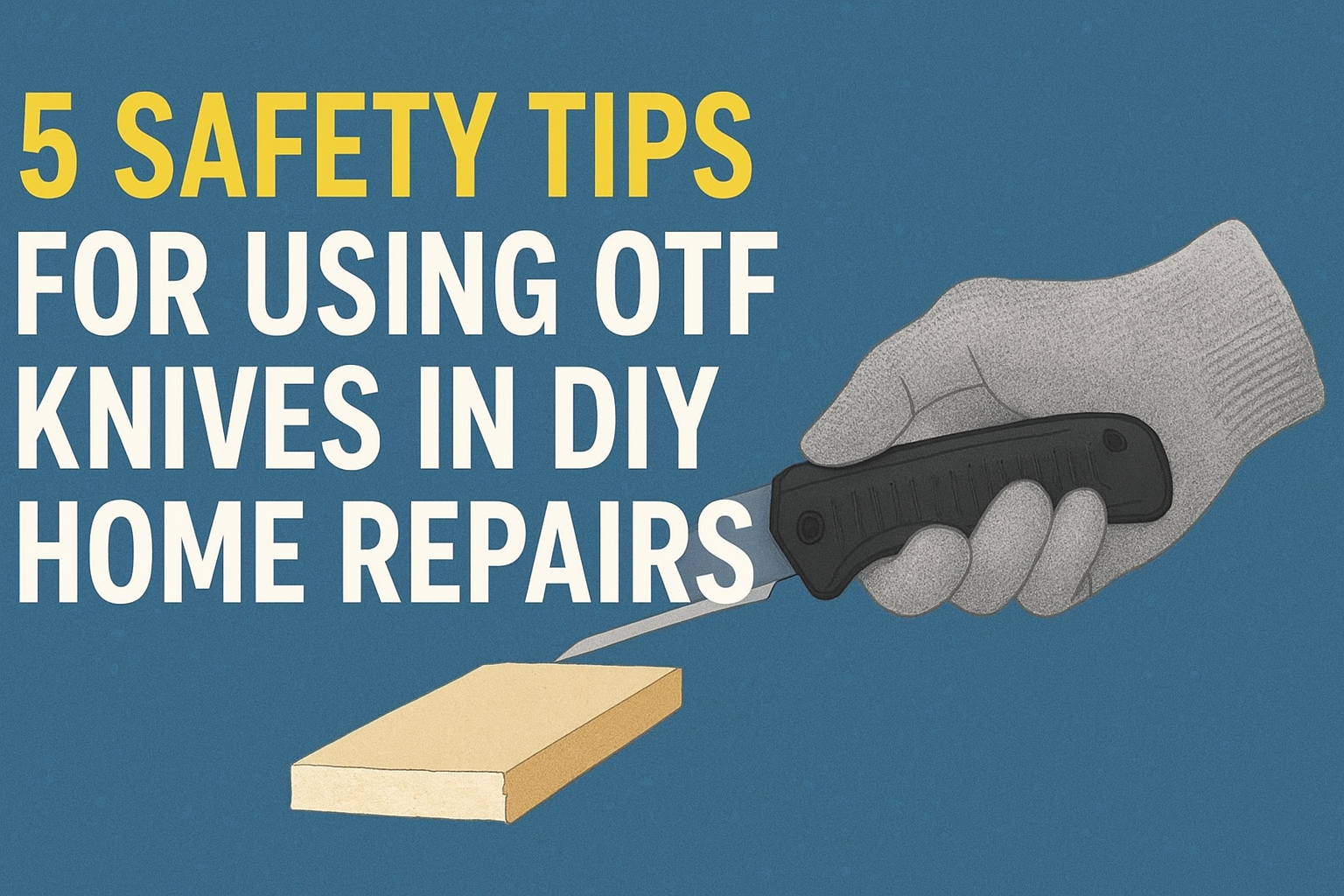
3. Wear the Right Safety Gear
Using any cutting tool—including an OTF knife—requires basic protective gear. The right equipment can protect you from accidental slips, debris, or unexpected blade deployment.
Safety Gloves
Choose cut-resistant gloves made of:
- Kevlar
- Nitrile
- Stainless steel weave
These materials can significantly reduce the chances of cuts.
Safety Glasses
When cutting materials like plastic, thin wood, or insulation, fragments can fly. Safety goggles or glasses protect your eyes from debris.
Closed-Toe Shoes
If the knife or materials accidentally fall, your feet will be protected.
A Clean Work Area
Safety gear isn’t just what you wear—it’s also the environment you create. A clutter-free workspace minimizes distractions and hazards.
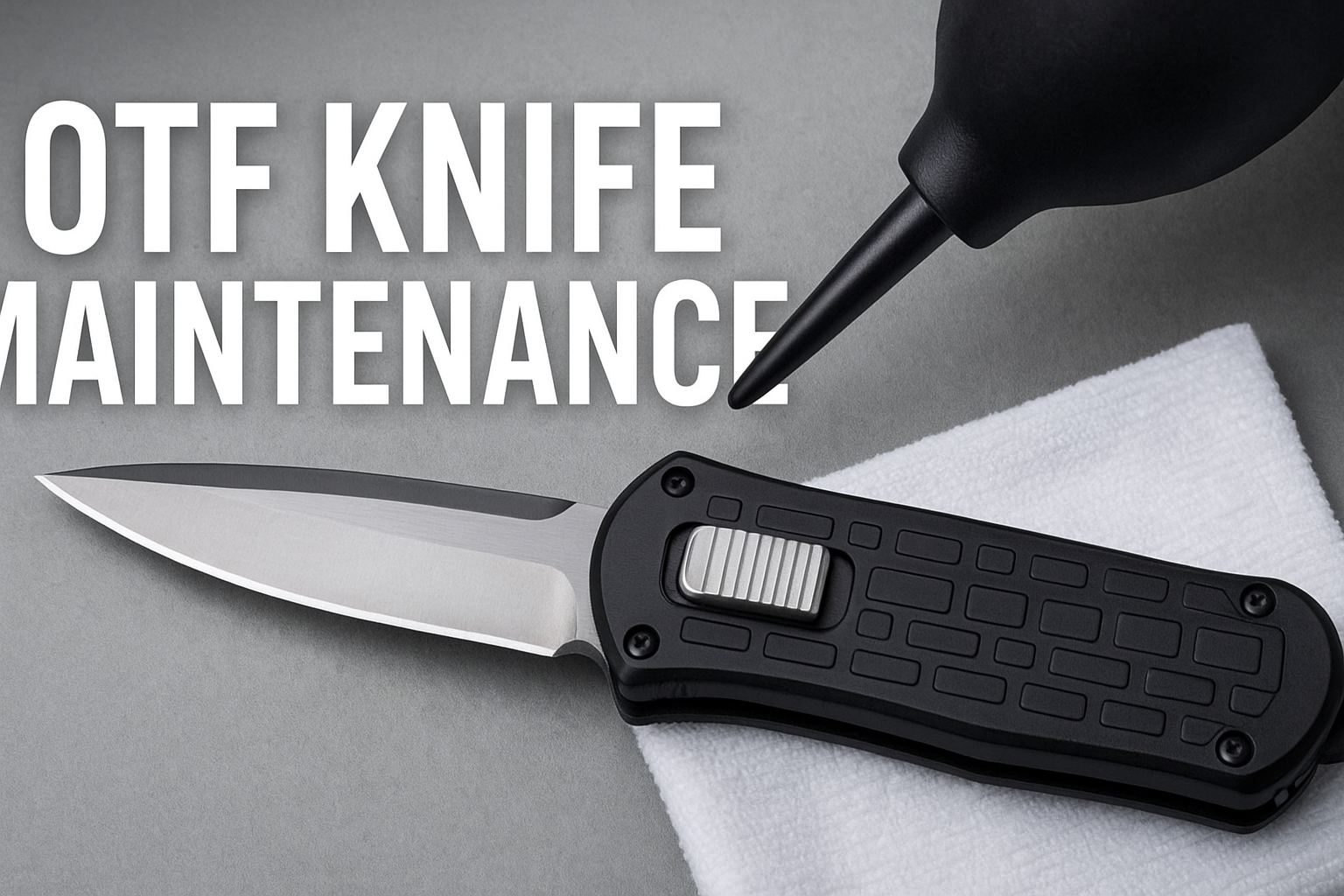
4. Keep Your OTF Knife Clean and Properly Maintained
A well-maintained OTF knife is a safer tool. Dirt, dust, and debris inside the knife’s mechanism can cause malfunction, delayed deployment, or even partial blade extension. That is a serious safety hazard.
Clean the blade regularly
After each DIY project:
- Wipe the blade with a soft cloth
- Remove any adhesive residue
- Apply a small amount of oil if recommended by the manufacturer
Clean the internal mechanism (if allowed)
Some OTF knives can be disassembled for maintenance. If yours allows it:
- Open the handle carefully
- Remove dust, debris, or lint
- Lubricate lightly as recommended
If your knife isn’t designed for disassembly, use compressed air to clean the internal components.
Inspect the knife before each use
Check for:
- Loose screws
- Blade wobble
- Faulty locking mechanisms
- Incomplete blade deployment
A knife in poor condition is more likely to malfunction.
5. Store Your OTF Knife Safely When Not in Use
Even when not in use, an OTF knife can still pose a danger if stored improperly. Proper storage ensures the knife remains sharp, clean, and out of reach of children or pets.
Use a sheath or protective case
Most OTF knives come with a sheath or pouch. Using it prevents accidental activation and protects the blade.
Engage the safety lock
Some OTF knives include a built-in safety lock to prevent unintended deployment. Always lock the knife before storing.
Keep it out of reach
Store your knife:
- In a toolbox
- In a locked drawer
- On a high shelf
Never leave an OTF knife lying around during or after a DIY project.
Follow local regulations
Depending on your location, OTF knives may have specific storage or carrying regulations. Make sure to follow the guidelines in your area to stay safe and compliant.
Final Thoughts
OTF knives are powerful and versatile tools that can make DIY home repairs easier, faster, and more precise. However, they require responsible use and awareness. By following these five safety tips—understanding the mechanism, stabilizing your work area, using the right protection, maintaining your knife, and storing it safely—you can enjoy all the benefits of an OTF knife while minimizing risks.
With proper care and safety practices, an OTF knife can become a long-lasting and reliable part of your home repair toolkit.